

Table of Contents
- The 3 to 5 Year Rule and Why It Fails Most Households
- Factors That Change How Often Septic Tanks Are Pumped
- Signs of a Failing Septic System You Should Never Ignore
- Septic Tank Pumping Cost: What Affects the Price
- DIY Pumping vs. Hiring a Licensed Septic Service Provider
- Septic System Maintenance Tips for Year-Round Protection
- Frequently Asked Questions
Last Updated: September 25, 2026
The 3 to 5 Year Rule and Why It Fails Most Households
Most homeowners hear the same advice: pump your septic tank every three to five years. That guidance is a starting point, not a rule. The real answer to how often should septic tanks be pumped depends on your household, your tank size, and how much water you send down the drain each day.
The generic timeline can fail in homes with six people and hold up fine in homes with two. The three-to-five-year window assumes average use. Most households aren’t average.
The Standard Rule of Thumb for Pumping Frequency
The three-to-five-year rule comes from standard tank sizing. A typical home gets a tank sized for its bedroom count, and that tank fills with solids at a predictable pace under normal use.
Here’s the catch: “normal” means two to three people, moderate water use, and no garbage disposal.
The three-to-five-year rule is a baseline, not a schedule. Your real interval depends on household size, water use, and what you put down the drain.
Why Your Actual Interval Is Different
Two homes on the same street can need pumping on completely different schedules. A family of five with teenagers taking long showers will fill a tank far faster than a retired couple.
Factors That Change How Often Septic Tanks Are Pumped
Several variables decide your real pumping interval. The big ones are household size, water consumption, and tank capacity. Appliances matter too, and most guides skip that part.
Household Size, Water Use, and Tank Capacity
More people means more wastewater. That’s the simplest factor, and usually the biggest one.
- Each additional person adds roughly the same daily load to the tank
- High-efficiency fixtures cut water use and slow solids buildup
- Leaky toilets and dripping faucets add constant, invisible load
- Long showers and multiple laundry loads push water through faster than the tank can separate it
Garbage Disposals, Water Softeners, and Other Appliances
This is where most advice falls short. Garbage disposals send food scraps into the tank, and those scraps become solid waste that never breaks down the way human waste does. A kitchen disposal can cut your pumping interval dramatically.
Running a garbage disposal daily is one of the fastest ways to shorten your pumping interval. Food scraps add solids that anaerobic bacteria can’t fully break down, so the sludge layer rises faster and can clog the drain field.
Signs of a Failing Septic System You Should Never Ignore
The warning signs of a failing septic system are easy to miss until the problem is expensive. Catch them early and you avoid a sewage backup, groundwater contamination, and a full system failure.
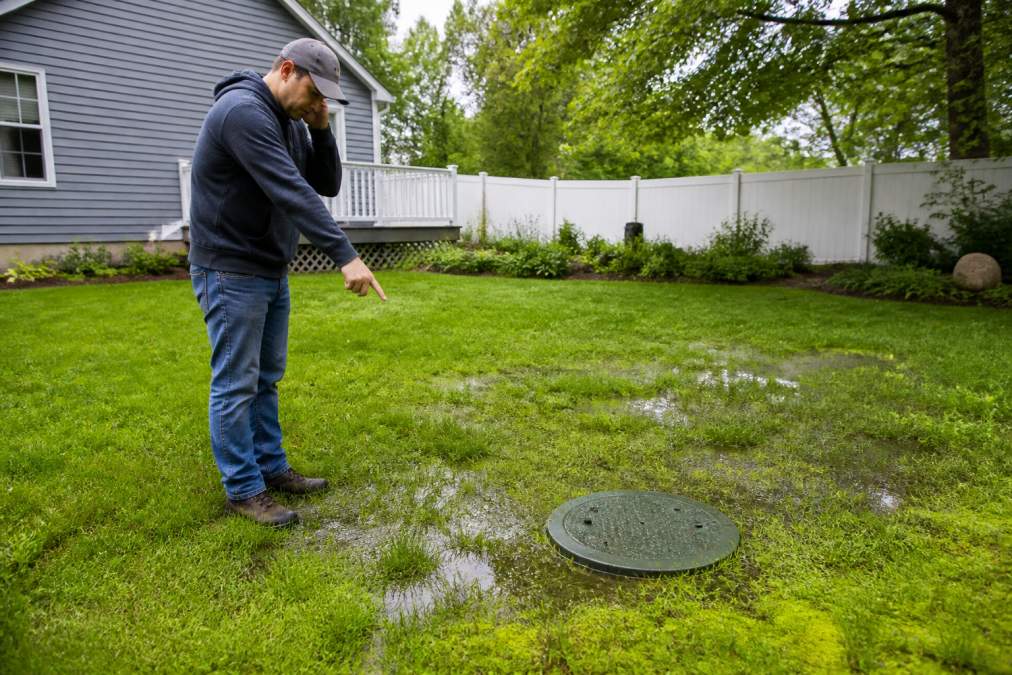
Watch for these signals:
- Sewage odors inside the house or near the tank lid
- Slow drains in multiple fixtures at once
- Gurgling sounds in pipes after flushing
- Soggy ground or standing water over the drain field
- Unusually green grass in strips above the leach field
- Backflow into tubs or showers when you run the washing machine
Septic Tank Pumping Cost: What Affects the Price
Septic tank pumping cost varies widely, and anyone quoting a flat number over the phone is guessing. Pricing depends on several factors that only become clear on site. But you still deserve a realistic range before you call, so here is what homeowners typically see.
What Drives the Price Up or Down
| Factor | Typical Impact on Price |
|---|---|
| Tank size (750 to 1,500 gallons) | Smaller tanks cost less; larger tanks take longer to pump and haul |
| Lid accessibility | Buried or covered lids add digging labor, often $100 or more |
| Tank riser access | Risers make service faster and cheaper, and pay for themselves over a few visits |
| Sludge and scum depth | Heavy solids accumulation takes more time and raises disposal cost |
| Distance to disposal site | Hauling fees rise with distance, which is why rural service costs more |
| Time of year | Emergency and peak-season calls cost more than a scheduled visit |
| Local disposal fees | Treatment plant or landfill tipping fees vary by county and get passed through |
A tank with an accessible lid and a tank riser is quick to service. A tank buried under a deck or lawn is a different job entirely. That’s why a real quote requires a look at your setup, not a phone estimate.
Regional Price Differences
Pricing is not uniform across the country. Markets with higher labor rates and stricter disposal rules sit at the top of the range. Rural areas with long haul distances can cost more than nearby suburbs because of fuel and tipping fees. A homeowner in a dense metro area may pay less for labor but more for disposal, while a rural homeowner pays the opposite.
If your tank lid is buried, ask about installing a tank riser at your next pump-out. It brings the lid to ground level, which makes every future septic inspection faster and cheaper, and it usually pays for itself within a few service cycles.
What Is Not Included
Most quotes cover pumping and hauling only. They may not include:
- Digging out a buried lid
- Repairing a cracked baffle or damaged tank wall
- Drain field evaluation or repair
- Emergency after-hours surcharges
DIY Pumping vs. Hiring a Licensed Septic Service Provider
Homeowners who want the job done safely and want to know the true condition of their system, not just an empty tank.
Jonnie On The Spot has handled septic service for over 40 years as a licensed and insured, family-owned business. Our crew shows up on time and handles the full job, from pumping to inspection, so you’re not left guessing about the health of your system.
Septic System Maintenance Tips for Year-Round Protection
Good septic system maintenance stretches the time between pump-outs and protects your drain field. These habits make a measurable difference, and timing them to the seasons keeps you ahead of problems instead of reacting to them.
A Seasonal Maintenance Calendar
Most guides give you a flat list. A calendar is more useful because bacterial activity, water tables, and household load all change through the year.
- Spring: After snowmelt or heavy rain, walk the drain field and look for soggy spots or standing water. Check for clogged pipes and slow drains. This is a good time to schedule an inspection if you are near your interval.
- Summer: Highest water use of the year, with laundry, showers, and irrigation. Watch your load and spread tasks out. Keep roof and sump water diverted away from the tank and field.
- Fall: A smart time to pump, before cold weather slows anaerobic bacteria and before holiday gatherings add load. Have the tank serviced now so winter is not a risk.
- Winter: Cold slows bacterial action, so solids accumulate faster relative to breakdown. Avoid driving heavy vehicles over the drain field when the soil is saturated, and keep an eye out for backups during holiday hosting.
Appliance-Specific Habits That Extend Your Interval
This is where most advice falls short. Your appliances decide how fast solids and water hit the tank.
- Garbage disposal: Use it sparingly or skip it. Food scraps become solid waste that anaerobic bacteria cannot fully break down, so the sludge layer rises faster and can clog the drain field. A kitchen disposal used daily can cut your pumping interval dramatically.
- Water softener: The recharge cycle dumps a concentrated burst of water and minerals into the tank. That extra hydraulic load stirs up the sludge layer and can push scum toward the outlet baffle. If you have a softener, factor it into your interval.
- Washing machine: Spread loads across the week instead of doing them all in one day. A single laundry day can send more water into the tank than the system can separate at once.
- Dishwasher: Run full loads only. Small, frequent cycles waste water and add load without benefit.
Everyday Habits That Protect the System
- Never flush wipes, paper towels, or feminine products, even the ones labeled flushable
- Fix leaks in toilets and faucets right away, since a running toilet adds constant invisible load
- Keep vehicles off the drain field to avoid compacting soil
- Divert roof and sump water away from the tank and drain field
- Schedule an inspection every few years to track solids accumulation
According to the U.S. EPA’s homeowner guide to septic system care, protecting the drain field and watching what goes down the drain prevents most costly failures. Local ordinances may also require inspections on a set schedule, so check with your county health department.
Match your maintenance to the season and to your appliances. A calendar plus appliance-aware habits will stretch your interval further than any single tip.
Frequently Asked Questions
Can you pump your septic tank too often?
Pumping more frequently than needed won’t damage the tank itself, but it wastes money and disrupts the anaerobic bacteria that break down solid waste. The right interval depends on tank volume, household occupancy, and water consumption. The right interval depends on tank volume, household occupancy, and water consumption.
What are signs that your septic tank is full?
Watch for slow drains throughout the house, gurgling sounds in pipes, sewage odors near the tank or drain field, standing water over the leach field, and backups in the lowest fixtures. These signs of a failing septic system mean solids or scum have reached the outlet baffle. Call a licensed septic service provider for an inspection before wastewater backs up into your home.
How does household size affect septic pumping frequency?
Every person adds roughly 50 to 70 gallons of wastewater per day, plus solids that settle as sludge. A two-person home with a 1,250-gallon tank may go 5 to 6 years between pumpings, while a family of six with the same tank may need service every 1 to 2 years. More occupants mean faster solids accumulation and a shorter pumping interval.
What happens if you neglect septic tank maintenance?
Skipping routine pumping lets sludge and scum layer buildup flow into the drain field, clogging the soil pores that treat effluent. The result is sewage backup, groundwater contamination, and a system failure that can cost thousands to replace. Regular septic inspection and preventative maintenance extend the life of your system and keep local ordinances satisfied.