

Table of Contents
- Start With a Septic Service Checklist
- Verify Licensing, Insurance, and Local Rules
- Septic Service Questions to Ask Before You Hire
- What a Proper Septic System Inspection Should Cover
- Common Septic Service Issues to Watch For
- Keep Septic Service Records for Every Visit
- Emergency Service and Response Times
- Conclusion
- Frequently Asked Questions
Last Updated: October 21, 2026
Start With a Septic Service Checklist
Choosing a septic service starts with a simple checklist: proof of licensing, active insurance, clear scope of work, and a written record of every visit. This guide from Jonnie On The Spot covers how to choose a septic service in Saginaw, MI without guesswork or surprises. We’ve worked on systems across Mid-Michigan for over 40 years, and the pattern is always the same. Homeowners who ask questions up front get fewer callbacks and fewer backups.
Here’s the short version of what to check before you hire anyone:
- License number you can verify with the state or county
- Current liability and workers’ comp insurance
- Written scope: what gets pumped, inspected, and reported
- Disposal plan for the waste they remove
- Response window for emergencies
- Copy of records after every visit
Most people skip half of this list. Then they find out the hard way.
Ask for the license number before you ask for a quote. A real septic service will hand it over in seconds. A vague answer tells you plenty.
Verify Licensing, Insurance, and Local Rules
Licensing and insurance come first because they protect you, not the contractor. A septic service that pumps waste is handling regulated material, and Michigan rules apply to how that waste is transported and disposed of. County health departments also set their own permit and inspection requirements, and those can differ from one township to the next.
Ask for three things in writing:
- State license number for waste hauling
- Certificate of insurance showing general liability coverage
- Workers’ comp coverage in case someone gets hurt on your property
Then make one phone call to your county health department. Confirm the company is allowed to operate where you live. This takes five minutes and settles the question of whether you’re dealing with a legitimate operation.
If a provider hesitates on any of this, move on. There are plenty of licensed crews in the region.
Septic Service Questions to Ask Before You Hire
The right septic service questions to ask fall into four groups: scope, timing, disposal, and documentation. Get clear answers to all four before anyone backs a truck onto your lawn.
Scope questions:
- Will you pump the whole tank or just the top layer?
- Do you inspect the baffles and outlet while you’re in there?
- Is the inspection included or an add-on?
Timing questions:
- How soon can you get here for routine work?
- What’s your response time for a backup or emergency?
- Do you charge extra for weekends or after hours?
Disposal questions:
- Where does the waste go, and can you show me the disposal site?
- Do you handle the paperwork for county records?
Documentation questions:
- Will I get a written report after the visit?
- Do you note tank condition, levels, and anything that needs watching?
A good crew answers these without flinching. A cheap crew changes the subject. That difference matters more than the invoice.
The most common mistake is hiring on price alone. A crew that skips the inspection or dumps waste illegally can leave you holding the bill for cleanup and county fines.
What a Proper Septic System Inspection Should Cover
A proper septic system inspection covers the tank, the inlet and outlet baffles, the drain field, and the soil around it. It should also include a written report you can file away for the next visit.
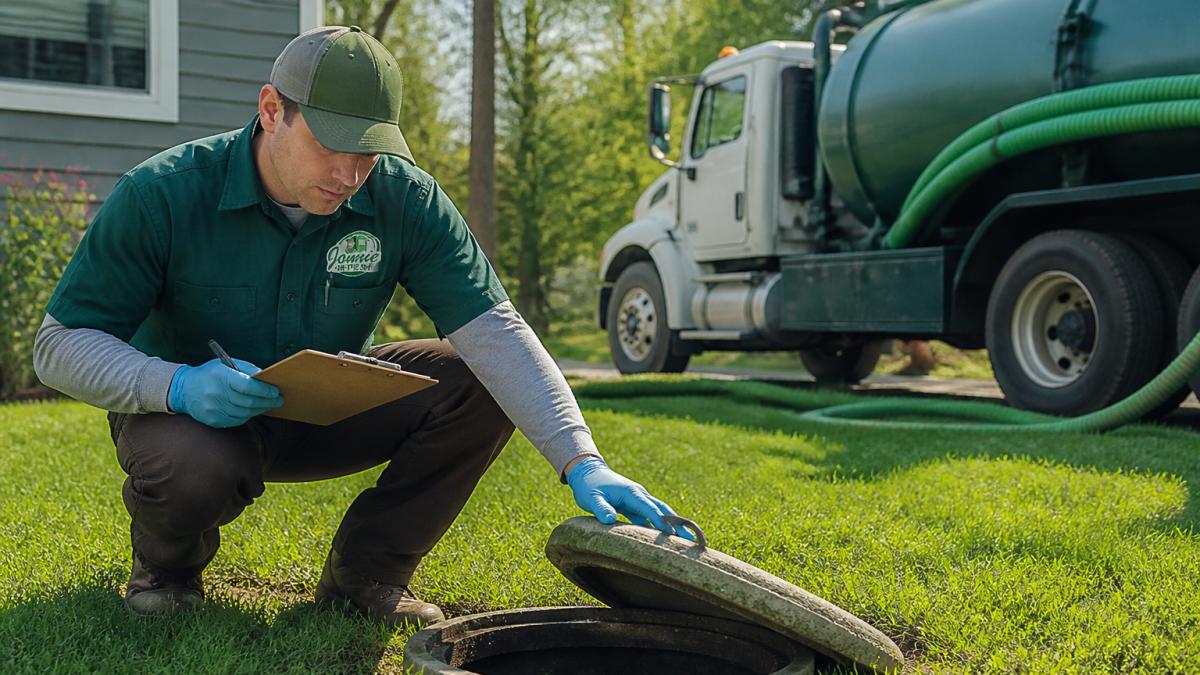
Here’s what a thorough inspection looks like:
- Tank condition: cracks, corrosion, and lid fit
- Levels: whether the tank is overfull or draining slowly
- Baffles: intact and positioned correctly
- Drain field: signs of pooling, odor, or soggy ground
- Alarm and pump: working if your system has one
Ask the technician to walk you through what they find. You don’t need to be an expert. You just need to know what’s normal and what needs watching. A crew that explains the findings is a crew that wants you to understand your own system.
Common Septic Service Issues to Watch For
Most septic service issues show up as small warnings long before a backup. Slow drains, gurgling pipes, and a faint smell near the tank are the usual early signs. Catch them and you’re looking at routine maintenance. Ignore them and you’re looking at an emergency call.
The issues we see most often:
- Skipped pumping: waiting too long lets solids build up and flow into the drain field
- Wrong additives: some products kill the bacteria your system needs
- Heavy drain field traffic: parking or building over the field compacts the soil
- Water overload: too many loads of laundry in one day stresses the tank
- Missing records: no history means no way to spot a slow decline
If you’re seeing more than one of these, call a septic service near you sooner rather than later. A slow drain is a warning. A backup is a repair bill.
Keep Septic Service Records for Every Visit
Septic service records are your system’s history, and they’re worth more than most homeowners realize. Keep a folder with every pump-out date, every inspection report, and every repair note.
Your records should include:
- Date of each visit and who performed it
- Tank size and condition notes
- Pump-out volume and disposal confirmation
- Any parts replaced or repairs recommended
- Photos of the tank and drain field
Why bother? Because the next technician can see what’s been done and when. Because a buyer will ask for records if you ever sell the house. And because patterns show up in writing that you’d miss in memory. A system that gets pumped on schedule and documented every time is a system that lasts.
The single most useful habit is keeping a written log of every visit. It turns guesswork into a maintenance plan.
Emergency Service and Response Times
Emergency response time is the one number that matters when sewage is backing up into your home. Ask any septic service one question: how fast can you get here when it’s an emergency?
A few things to sort out before you need help:
- What counts as an emergency for their crew (backup, overflow, alarm)
- After-hours availability and whether weekends cost more
- Who answers the phone at night, a person or a machine
- How they handle a full tank that needs immediate pumping
Here’s the practical move: ask about emergency response before you hire, not after. A crew that can’t tell you their response window is a crew that hasn’t thought about it. When your basement is filling up, you don’t want to find out the hard way.
Jonnie On The Spot runs septic, portable restroom, hydro excavating, and catch basin cleaning with one crew, which keeps scheduling simple for homeowners and property managers alike.
Conclusion
The challenge with septic service isn’t finding someone with a truck. It’s finding a crew that shows up on time, documents the work, and answers the phone when it matters. Jonnie On The Spot offers licensed and insured septic service in Saginaw and across Mid-Michigan, backed by 40 years as a family-owned business. Our crew handles routine pumping, inspections, portable restrooms, hydro excavating, and catch basin cleaning, so you’re not juggling vendors. Get a quote and keep your system flowing.
| What to Check | Why It Matters | What to Ask |
|---|---|---|
| License and insurance | Protects you from liability | Can I see your certificate? |
| Scope of work | Prevents surprise add-ons | Is inspection included? |
| Response time | Matters in a backup | How fast for emergencies? |
| Records | Tracks system health | Will I get a written report? |
| Disposal plan | Keeps you compliant | Where does the waste go? |
Frequently Asked Questions
How do I choose a reliable septic service?
Start by confirming the company is licensed and insured, then ask how long it has operated in your area. Request a written scope of work before any pumping or inspection begins, and ask whether the crew handles both routine maintenance and emergency calls. Read recent local reviews and ask neighbors who they use. A provider that answers questions clearly, explains what a septic system inspection includes, and puts terms in writing is usually the safer choice over the cheapest bid.
What questions should I ask a septic company before hiring?
Ask whether they are licensed and insured, how they dispose of pumped waste, and whether they provide a septic service checklist or written report. Confirm response times for emergencies, whether they handle commercial properties, and how they document each visit. Also ask what a septic system inspection covers and whether they flag repairs in writing. Clear answers to these septic service questions to ask separate organized providers from callers who only quote a price.
What should a septic service inspection include?
A thorough septic system inspection covers tank levels, sludge and scum thickness, baffle condition, and signs of backup or leakage in the drain field. The technician should check for cracks or damaged lids, confirm the tank is pumped when needed, and note any warning signs such as slow drains or odors. You should receive a written summary of findings and recommendations, which becomes part of your septic service records for future visits.
What records should I keep after septic service?
Keep the date of service, the company name, the technician’s findings, the amount pumped if applicable, and any repair recommendations. Save inspection reports, permits, and installer paperwork in one folder, either paper or digital. Good septic service records help the next provider understand your system’s history and can support a home sale or warranty claim. Update the file after every visit so nothing relies on memory.