

Table of Contents
- How Hydro Excavation for Underground Utilities Works
- Daylighting Underground Utilities: Seeing Before You Dig
- Hydro Excavation vs Mechanical Excavation
- Safety Considerations for Hydro Excavation
- When Hydro Excavation Is the Preferred Method
- Utility Potholing Services in Saginaw: What to Expect
- Frequently Asked Questions
Last Updated: October 2, 2026
How Hydro Excavation for Underground Utilities Works
Hydro excavation for underground utilities is a non-destructive digging method that uses a high-pressure water jet to break up soil and a powerful vacuum to remove it, exposing buried lines without metal tools ever touching them. At Jonnie On The Spot, a licensed and insured Mid-Michigan crew with over 40 years of experience, this is the method we trust when a gas main, water line, or fiber conduit sits somewhere under a Saginaw yard and nobody wants to be the one who guesses wrong.
The principle is simple: water cuts, air moves. The equipment does the rest.
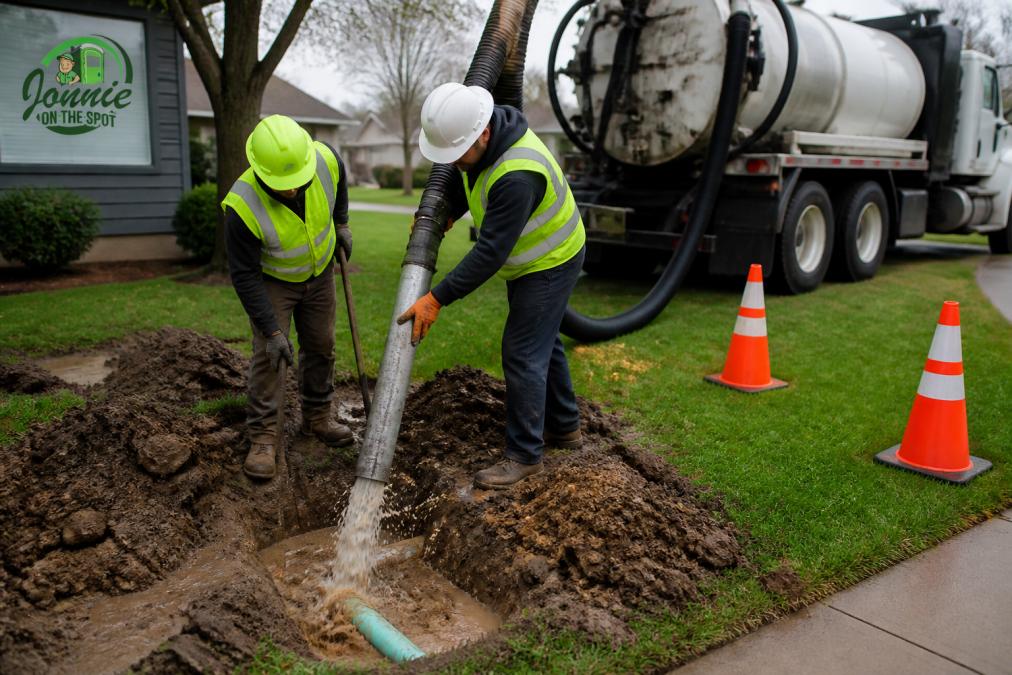
The Equipment and the Process, Step by Step
A hydro excavation rig pairs a pressure wand with a vacuum hose, and both run off the same truck-mounted system. The wand typically pushes water at pressures high enough to cut compacted soil but gentle enough to leave a plastic pipe intact. The vacuum then lifts the slurry into a debris tank on the truck.
A typical job runs in this order:
- Locate and mark the utility using 811 call-before-you-dig markings
- Set up containment around the dig area
- Jet the soil with the pressure wand in controlled passes
- Vacuum the slurry into the tank as you go
- Hand-shovel the final few inches to confirm the line
- Backfill and restore once the work is done
Most residential potholes take under an hour. Deeper or wider excavations run longer, but the process stays the same.
What Comes Out of the Hole
The debris tank collects a mix of soil, water, and rock. In most cases, the spoils are tested for contamination before disposal, since some sites carry old fuel, chemical, or septic residue. Clean spoils usually get backfilled on site. Contaminated material goes to an approved disposal facility.
Ask your contractor where the spoils go before work starts. On older commercial sites, contaminated soil disposal is often the single biggest line item on the invoice, and it pays to know that up front rather than after the truck leaves.
Daylighting Underground Utilities: Seeing Before You Dig
Daylighting underground utilities means exposing a buried line to direct visual confirmation before any mechanical digging begins. It is the safest way to answer the question every excavation starts with: where exactly is that pipe?
Hand tools can do this on shallow, soft ground. Hydro excavation does it faster, cleaner, and in conditions where a shovel would be useless, such as frozen soil or tightly packed clay.
Hydro Excavation vs Mechanical Excavation
Hydro excavation and mechanical excavation solve different problems. Mechanical digging moves volume fast, but a backhoe bucket cannot tell a gas line from a root. Hydro excavation is slower per cubic yard but will not cut what it touches.
| Factor | Hydro Excavation | Mechanical Excavation |
|---|---|---|
| Speed on open ground | Slower | Faster |
| Risk to buried lines | Very low | High without daylighting |
| Best soil conditions | Any, including frozen | Loose, unfrozen soil |
| Typical use | Potholing, tight utility zones | Bulk trenching, mass grading |
| Spoils handling | Slurry, needs tank | Dry, easy to stockpile |
Where Mechanical Digging Still Makes Sense
Mechanical excavation is the right call for large open areas with no known utilities, mass grading, and trenching where the line path is already daylighted and marked. The two methods work best together: daylight with hydro, then bring in the machine once the path is clear.
Skipping the daylighting step to save time is the most common shortcut on utility jobs, and it is the one that causes the most damage. A single struck gas line can shut down a site, trigger evacuation, and turn a one-day job into a multi-week investigation.
Safety Considerations for Hydro Excavation
Safety on a hydro excavation site comes down to three things: knowing where the lines are, controlling the pressure, and managing the slurry. The water jet can cause serious injury at close range, so the wand operator wears full PPE and never points the nozzle at a person. The vacuum hose carries enough force to pull loose clothing, so nobody stands near the intake.
What Happens If a Line Is Struck
If a line is struck, the crew stops work immediately, clears the area, and calls 911 if the line is gas or another hazardous utility. The utility owner is notified next, followed by the property owner and any affected tenants. Damage documentation, including photos and the exact location, gets filed with the state’s one-call system.
When Hydro Excavation Is the Preferred Method
Hydro excavation is the preferred method whenever a buried utility’s exact location is uncertain or the cost of a strike is high. That covers most urban and suburban utility work, most gas and fiber installations, and nearly every job where the records are old or incomplete.
It is also the method of choice when:
- The soil is frozen, rocky, or tightly compacted
- The line is plastic, fiber, or coated and cannot take a metal strike
- The site is tight, landscaped, or paved and needs minimal disturbance
- The utility owner requires visual confirmation before work proceeds
Utility Potholing Services in Saginaw: What to Expect
Utility potholing services in Saginaw follow the same pattern as anywhere else in the region: call 811, mark the area, daylight with hydro, document the finding, and backfill. What changes is the local ground. Mid-Michigan soils run heavy in clay, and winter frost drives lines deeper than crews in warmer states expect.
The single most important thing to verify before any utility dig is that the crew daylighting the line is licensed, insured, and willing to document the exposed utility with photos. That documentation is what protects the property owner if a dispute arises later.
Frequently Asked Questions
What is hydro excavation used for in utility work?
Hydro excavation uses pressurized water and a vacuum to expose buried lines without cutting them. Crews use it to daylight gas, water, electric, fiber, and sewer lines before trenching, to pothole for locating, and to clear soil around valves and pipes for repair. Because water does the cutting, there is no metal bucket swinging near a live line, which lowers the risk of a strike and keeps the utility in service while work continues.
How does hydro excavation prevent damage to underground utilities?
The water stream cuts soil, not pipe. It is set below the pressure that would rupture a gas line or slice a fiber conduit, and the operator watches the hole as it opens, so the line appears before anything touches it. Mechanical buckets dig blind and can hook a cable or crack a main before the operator sees it. That difference is why hydro excavation for underground utilities is the standard for potholing and daylighting work.
Is hydro excavation safer than mechanical digging in Saginaw?
For any hole where a live utility may be present, yes. Michigan law requires calling 811 before you dig, but locator marks can be off by inches and unmarked lines exist. Hydro excavation confirms the exact position and depth of a line instead of trusting paint. Mechanical digging is still fine for open areas with no buried infrastructure, but near gas, electric, or fiber, hydro is the safer choice.
What are the benefits of daylighting underground utilities?
Daylighting exposes a line so crews can measure its depth, direction, and condition before excavation begins. That prevents struck lines, keeps gas and electric service on, cuts repair costs, and keeps a project on schedule because there is no emergency shutdown. It also gives engineers a real look at pipe material and corrosion, which matters when planning a repair or replacement in an older system.
How does Jonnie On The Spot handle hydro excavation in Mid-Michigan?
Jonnie On The Spot is a licensed and insured, family-owned Mid-Michigan company with over 40 years of experience. The crew handles utility potholing services in Saginaw and the surrounding area, plus septic, catch basin, and portable restroom work on the same site visit. Call 811 first, then request a quote with your project address, the utilities involved, and the depth you need to reach.
How much does hydro excavation cost?
Pricing depends on the number of holes, depth, soil conditions, access, and whether the truck can reach the site. A single pothole costs less than a full daylighting run along a trench line. Jonnie On The Spot does not publish flat rates because every job differs. Request a quote with your address and scope, and you will get a number based on the actual work, not a guess.
Can hydro excavation be used in winter?
Yes, with the right equipment and planning. Frozen ground slows the cut, and the vacuum tank and water lines need to be kept from freezing between jobs. Crews in Mid-Michigan run hydro excavation year-round for utility repairs, catch basin work, and emergency line exposure. Scheduling ahead helps, since winter demand and cold-weather setup add time to each hole.
What happens if a utility line is damaged during excavation?
A licensed and insured operator follows the 811 locate ticket, potholes to confirm depth, and stops work if a line is struck. The crew calls 911 if there is a gas leak or electrical hazard, then notifies the utility owner. Insurance covers repair costs when the operator is at fault. That is why you check licensing and insurance before hiring, not after something goes wrong.
Underground utility work in Mid-Michigan does not forgive shortcuts. Whether you manage a commercial property in Saginaw, run a construction site, or need a residential line exposed before a repair, Jonnie On The Spot brings over 40 years of family-owned experience, a licensed and insured crew, and the equipment to daylight, pump, and clean in one visit. Get a quote from Jonnie On The Spot and keep your project on schedule and up to code.