

Table of Contents
- Signs of Clogged Catch Basin Drains You Should Never Ignore
- Common Causes of Sewage Backups in Commercial Buildings
- Sewer Backup Prevention Checklist for Businesses
- How Commercial Catch Basin Cleaning Prevents Costly Backups
- What to Do During a Sewage Backup at Work
- Conclusion
- Frequently Asked Questions
Last Updated: October 17, 2026
Signs of Clogged Catch Basin Drains You Should Never Ignore
Preventing sewage backups in commercial buildings starts with catching the warning signs early. A catch basin is the underground collection point that traps debris before water reaches the main sewer line. When it clogs, the first clues show up above ground, and they are easy to miss if you do not know what to look for.
Jonnie On The Spot has handled catch basin cleaning across Saginaw and the surrounding region for more than 40 years. In that time, we have seen small, ignored warnings turn into flooded parking lots and costly shutdowns.
What a Failing Catch Basin Looks and Smells Like
Standing water in a parking lot after rain is the clearest sign. Water that lingers more than a day points to a blocked drain, not a wet day. Other signals include:
- A foul, rotten-egg smell near grates or storm inlets
- Slow draining after storms, even light ones
- Sinkholes or soft, sunken spots in pavement
- Grease rings or dark stains around drain covers
- Grate openings packed with leaves, trash, or silt
Any one of these is a reason to call. Two or more means the basin is likely already failing.
Common Causes of Sewage Backups in Commercial Buildings
Most sewage backups trace back to a short list of causes, and nearly all of them build up slowly. The usual suspects are grease, tree roots, and heavy rain. Grease poured down drains cools and hardens inside pipes. Roots creep into small cracks and grow until they block flow. Heavy rain overloads a system that is already partly clogged.
Other common culprits include:
- Flushable wipes and paper towels that do not break down
- Aging pipes with cracks or collapsed sections
- Silt and debris filling the catch basin over time
- Improperly connected downspouts that flood the drain system
- Lack of routine commercial catch basin cleaning
Grease, Roots, and Heavy Rain: The Usual Suspects
Grease is the number one cause in food service and multi-tenant buildings. Roots are the top cause in older properties with mature landscaping. Heavy rain is the trigger that turns a slow drain into a backup. Together, they explain most of the emergencies we respond to.
Sewer Backup Prevention Checklist for Businesses
A simple routine prevents most backups. Use this sewer backup prevention checklist for businesses and assign one person to own it:
- Inspect catch basins and grates monthly for debris
- Schedule professional commercial catch basin cleaning on a set schedule
- Never pour grease, oil, or fat down any drain
- Post “no wipes” signs in restrooms and break rooms
- Keep landscaping roots away from sewer lines
- Check downspouts and route stormwater away from drains
- Log every inspection and cleaning date
- Train staff on what to report and who to call
Photograph each catch basin before and after cleaning. If a dispute or insurance claim ever comes up, dated photos prove you maintained the system.
How Commercial Catch Basin Cleaning Prevents Costly Backups
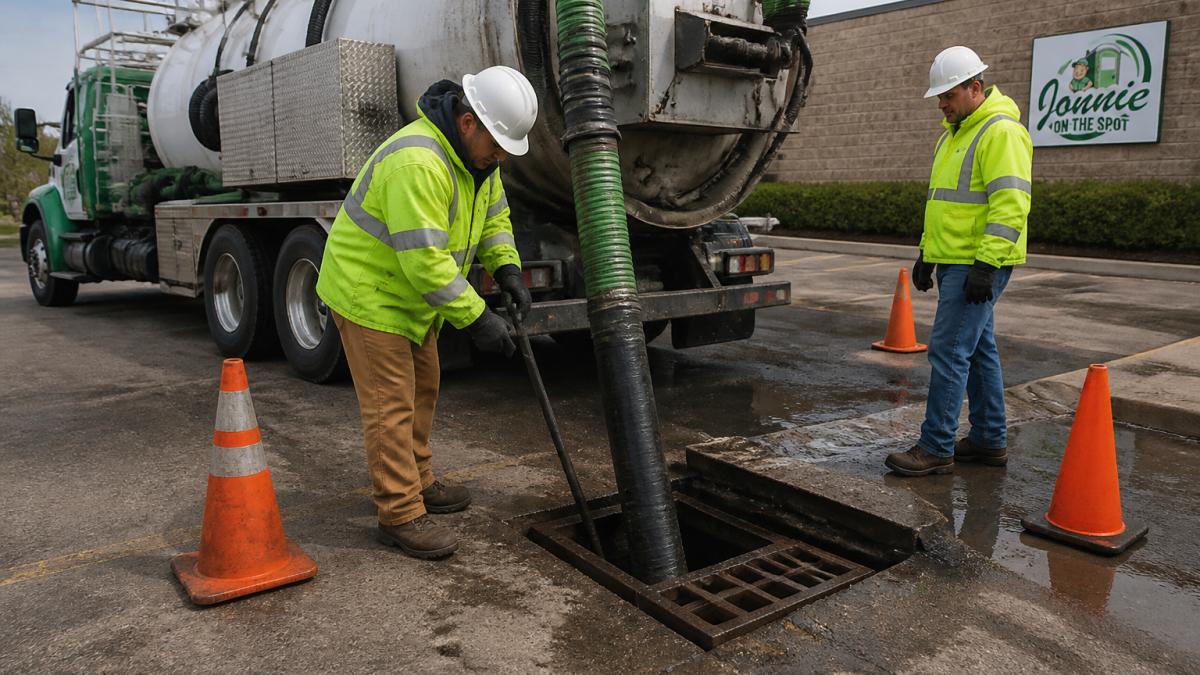
Professional cleaning removes the debris a shop vac cannot reach. Our crew pumps out the basin, clears the inlet and outlet pipes, and checks the structure for cracks. That step catches problems while they are small and cheap to fix.
Regular service keeps water moving, which is the whole point of preventing sewage backups in commercial buildings. It also protects your property from flooding and keeps you up to code. For property managers juggling several sites, one crew on a set schedule beats chasing multiple vendors. Jonnie On The Spot handles catch basin cleaning at every location on one plan.
What to Do During a Sewage Backup at Work
Act fast and keep people away from the mess. Sewage carries bacteria and other hazards, so safety comes first. Follow these steps:
- Stop using water in the building immediately
- Block off the flooded area and post warning signs
- Shut off power to any wet areas if it is safe to do so
- Call a licensed crew for emergency service
- Document the damage with photos for insurance
- Keep staff and customers out until the area is cleaned and cleared
Immediate Steps to Protect People and Property
Never let anyone walk through standing sewage in street shoes. Wear gloves and boots if you must enter, and wash up afterward. Move any inventory or equipment away from the water. Call your insurer early, then call us. Fast response limits the damage and the downtime.
Do not pour chemical drain cleaner into a backed-up catch basin. It can damage pipes and does nothing for a main-line blockage, which makes the next backup worse.
Conclusion
A slow drain today is a flooded lot tomorrow. The businesses that avoid emergencies are the ones that inspect, clean, and log on a schedule. If you need catch basin cleaning, septic service, or hydro excavating in Saginaw or anywhere in Mid-Michigan, Jonnie On The Spot is ready. We are licensed and insured, family owned, and we show up on time. Get a quote today and keep your system flowing.
Frequently Asked Questions
What causes sewage backups in commercial buildings?
Sewage backups in commercial buildings usually come from four sources: grease and solids clogging the line, tree roots invading older pipes, a catch basin packed with debris, or heavy rain overwhelming the municipal system. Buildings with restaurants or food prep add grease volume fast. Properties with flat parking lots and few drains send stormwater straight into the sewer lateral. Each cause points to a different fix, which is why a camera inspection is worth the cost before you spend money on repairs.
How often should commercial catch basins be cleaned?
Most commercial properties need catch basin cleaning every six to twelve months. High-traffic lots, restaurant sites, and areas with mature trees may need quarterly service. The reliable test is sediment depth: once debris fills roughly half the basin’s sump, it needs pumping. Scheduling commercial catch basin cleaning on a calendar instead of waiting for a backup keeps the work predictable and prevents stormwater from backing onto pavement during heavy rain.
What should a business do if sewage starts backing up?
Stop using water immediately, close off the affected area, and keep employees and customers away. Call a licensed plumber or sewer contractor and notify your property manager or landlord. Document the damage with photos for insurance. Do not run more water to ‘flush it through,’ and do not handle raw sewage without proper protective equipment. Fast action limits both health risk and structural damage.
Can heavy rain increase the risk of sewage backups?
Yes. Heavy rain can overwhelm municipal sewer systems, and in combined systems stormwater and sewage share the same pipes. When that happens, water has to go somewhere, and the lowest points, often basement drains and floor drains, become the release valve. Clogged catch basins make it worse by sending stormwater into the sanitary line instead of the storm system. Regular drain and basin maintenance reduces that risk before the next storm.