

Table of Contents
- Why Septic Maintenance Matters for Homeowners
- Your Septic Tank Maintenance Checklist
- How Often to Pump a Septic Tank
- What Not to Flush With a Septic System
- Septic System Inspection: What to Check and When
- Warning Signs Your Septic System Needs Attention
- Protecting Your Drain Field and Preventing Costly Repairs
- When to Call a Septic Maintenance Professional
- Frequently Asked Questions
Last Updated: October 16, 2026
Why Septic Maintenance Matters for Homeowners
A septic system is the underground wastewater treatment setup that collects everything your household sends down the drain, separates the solids, and releases treated liquid into a drain field. For most rural and suburban homes around Saginaw, MI, it’s the only wastewater system you have. When it fails, you don’t get a warning light. You get a backup.
This guide from Jonnie On The Spot covers the septic maintenance tips for homeowners that actually prevent those failures. We’ve worked on these systems for over 40 years, and the pattern is always the same: the homes that avoid emergencies are the ones that do small, boring tasks on a schedule.
Here’s what most guides get wrong. They tell you to “watch for problems,” then leave you guessing what a problem looks like. Below, we’ll give you the actual checklist, the pumping timeline, and the warning signs, so you can stop guessing.
Septic systems rarely fail overnight. They fail slowly while the homeowner ignores small signals like slow drains or soggy grass.
How a Septic System Works (and Why It Needs Care)
Wastewater flows from your home into the tank. Heavy solids sink to the bottom as sludge. Grease and light material float to the top as scum. The liquid in the middle, called effluent, flows out into the drain field, where soil filters it.
That’s the whole system. Three layers, one pipe out, and soil doing the final cleaning. EPA guide to septic systems explains how that process protects groundwater and public health.
The tank only works if the layers stay balanced. When you flush things that don’t break down, or skip pumping for years, sludge builds up until it escapes into the drain field. That’s when repairs get expensive.
Your Septic Tank Maintenance Checklist
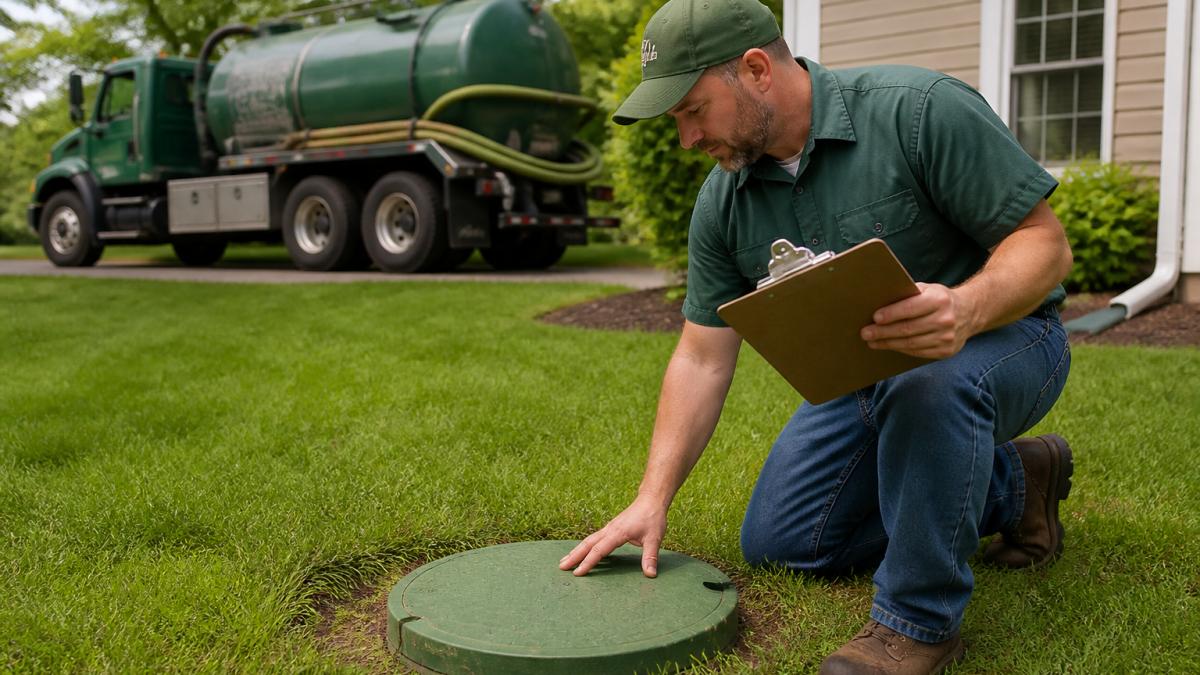
A septic tank maintenance checklist is a simple schedule of small tasks that keep your system running without emergencies. Split it into monthly, seasonal, and yearly jobs. None of them take long.
Monthly and Seasonal Tasks
- Check for slow drains or gurgling sounds
- Note any sewage smell inside or outside
- Watch the drain field for soggy spots after dry weather
- Spread laundry loads across the week instead of doing six in one day
- Keep heavy vehicles and parked trailers off the drain field
Annual and Multi-Year Tasks
- Have a professional inspect the tank and baffles
- Track your pumping date and set a reminder
- Check the riser lid for cracks or settling
- Keep a simple log of every service visit
A common mistake is treating this list as optional. It isn’t. Twenty minutes a month prevents the kind of repair that runs into the thousands.
How Often to Pump a Septic Tank
Most households need pumping every three to five years. The exact timing depends on tank size, how many people live in the home, and how much water you use.
Here’s the practical math. A larger family fills a tank faster. A garbage disposal adds solid waste and speeds up the timeline. A small household with a big tank can stretch longer.
Don’t guess. Ask a professional to measure the sludge and scum layers during an inspection. That reading tells you exactly where you stand, and it beats any generic schedule you find online. For homes in Saginaw and across the region, we recommend logging your last pump date the day it happens.
Waiting until you see a backup to pump is the single most expensive mistake homeowners make. By then, the drain field may already be damaged, and that repair costs far more than a routine pump-out.
What Not to Flush With a Septic System
What not to flush with a septic system comes down to one rule: if it doesn’t break down in water, it doesn’t belong in the tank. The system relies on bacteria to digest waste. Kill the bacteria or overload the tank, and everything slows down.
Never flush these:
- Wet wipes, even “flushable” ones
- Paper towels, tissues, and cotton balls
- Cooking grease, oil, and fat
- Coffee grounds and eggshells
- Medications and harsh chemicals
- Cat litter and dental floss
- Feminine hygiene products
Wipes are the biggest offender. They don’t dissolve, and they tangle into blockages that require a professional to clear. FDA guidance on medication disposal notes that flushing drugs is not the right method, and it’s hard on your system too.
Septic System Inspection: What to Check and When
A septic system inspection should happen once a year, plus any time you notice a change in how your drains behave. An inspection is not the same as pumping. It’s a checkup.
During an inspection, a technician looks at:
- Sludge and scum levels inside the tank
- Baffle condition and whether they’re intact
- The inlet and outlet pipes
- The riser and lid for cracks or gaps
- The drain field for standing water or soft ground
If you’re buying a home, get an inspection before you close. FHA property requirements treat a failing septic system as a serious issue, and a pre-purchase inspection protects you from inheriting someone else’s problem.
Warning Signs Your Septic System Needs Attention
Warning signs show up early if you know what to look for. Catch them and you’re looking at routine service. Ignore them and you’re looking at an emergency call.
Watch for these signals:
- Drains that empty slowly, one after another
- Gurgling sounds from toilets or sinks
- Sewage odor inside the house or near the tank
- Bright green grass or soggy patches over the drain field
- Standing water around the tank lid
- Multiple backups at once
One slow drain is often just a clog. Several at once usually means the tank is full or the drain field is struggling. That’s when you stop running water and make a call.
Protecting Your Drain Field and Preventing Costly Repairs
Protecting your drain field is mostly about keeping things off it. The soil needs to absorb and filter effluent. Compact it, cover it, or flood it, and the whole system backs up.
Follow these rules:
- Never park cars, trucks, or equipment on the field
- Don’t plant trees or shrubs within several feet of it
- Redirect downspouts and sump pumps away from the area
- Avoid paving over it
- Keep livestock off the field
Fixing a failed drain field is one of the most expensive septic repairs a homeowner can face. Protecting it costs nothing but attention.
Mark the corners of your drain field with small stakes or a simple sketch in your records. Future landscaping, fencing, or driveway projects won’t accidentally dig into it.
When to Call a Septic Maintenance Professional
Call a professional when you see warning signs, when your pumping window arrives, or when you’re not sure what’s happening. Some jobs are not DIY.
Reach out for help if you have:
- Multiple backed-up drains
- Sewage smell that won’t go away
- Standing water over the drain field
- A tank that hasn’t been pumped in years
- Any sign of a cracked tank or lid
If you’re searching for septic maintenance near me in Saginaw, look for a licensed and insured crew that handles both routine service and emergencies. Jonnie On The Spot has served Mid-Michigan for over 40 years as a family-owned business, with one crew for septic, portable restroom, hydro excavating, and catch basin cleaning needs.
Septic care rewards homeowners who stay ahead of it. Small habits, a written checklist, and a trusted crew on call keep your system flowing and prevent the backups that flood basements and wreck budgets. At Jonnie On The Spot, we handle routine septic maintenance, emergency pumping, and the site services that keep homes and properties up to code across the Saginaw area. Our licensed and insured team shows up on time, works clean, and keeps your system trouble-free. Get a quote from Jonnie On The Spot and put your septic worries behind you.
Frequently Asked Questions
How often should a homeowner have a septic tank inspected?
Most experts recommend a professional septic system inspection every one to three years, depending on the system’s age and how many people live in the home. If your system has an effluent filter, mechanical pump, or other components, annual inspections are a smart habit. Regular inspections catch small problems like cracked baffles or slow drains before they turn into expensive repairs, and they help you plan pumping around actual use instead of guessing.
How often should a septic tank be pumped?
As a general rule, most septic tanks need pumping every three to five years. The exact schedule depends on tank size, household size, and daily water use. A family of four with a 1,000-gallon tank typically falls in the three-to-five-year window, while smaller households may stretch it longer. Keep records of each pump-out so you can spot trends and adjust your septic maintenance schedule as your household changes.
What should you never put in a septic system?
Never flush wipes (even ‘flushable’ ones), paper towels, feminine hygiene products, diapers, cooking grease, coffee grounds, or harsh chemicals like paint thinner and bleach-heavy cleaners. These items either clog the inlet, smother the bacteria that break down waste, or both. What not to flush with a septic system also includes medications, cat litter, and dental floss. Scrape plates into the trash and use a lidded bin for grease instead of pouring it down the drain.
What are the signs that a septic system needs maintenance?
Watch for slow drains throughout the house, gurgling toilets, sewage odors inside or near the tank, standing water or unusually green grass over the drain field, and backups into the lowest fixtures. These signs often mean the tank is full, the inlet or outlet is clogged, or the drain field is struggling. If you notice any of them, stop heavy water use and call a licensed septic maintenance provider for an inspection before the problem gets worse.