

Table of Contents
- What a Catch Basin Does and Why It Clogs
- 7 Signs of Clogged Catch Basin Drains to Watch For
- How to Unclog a Storm Drain: Step-by-Step
- Catch Basin Cleaning Frequency: A Seasonal Schedule
- Catch Basin Inspection Checklist for Property Managers
- DIY vs. Professional Equipment: What You Can and Cannot Do
- When a Clogged Catch Basin Becomes a Legal Liability
- Frequently Asked Questions
Last Updated: September 26, 2026
What a Catch Basin Does and Why It Clogs
A catch basin is a below-ground box that collects stormwater runoff from streets, parking lots, and yards before it enters the sewer system. Water flows in through a curb inlet or sewer grate, solids settle to the bottom, and the cleaner water exits through an outlet pipe.
When that outlet pipe clogs, the basin stops doing its job. Water backs up, debris rots, and the next hard rain has nowhere to go.
At Jonnie On The Spot, we’ve cleaned catch basins across Mid-Michigan for over 40 years. The pattern is always the same: clogged catch basin problems start small and get ignored until they turn into flooding.
Three things cause most blockages:
- Sediment buildup that hardens at the bottom of the sump
- Organic debris like leaves, grass, and twigs packed over the outlet
- Fats, oils, and trash that bind everything together into a solid plug
The basin itself rarely fails. What fails is the maintenance schedule around it.
Most catch basin failures are maintenance failures, not structural ones. A basin that gets cleaned on schedule rarely floods.
7 Signs of Clogged Catch Basin Drains to Watch For
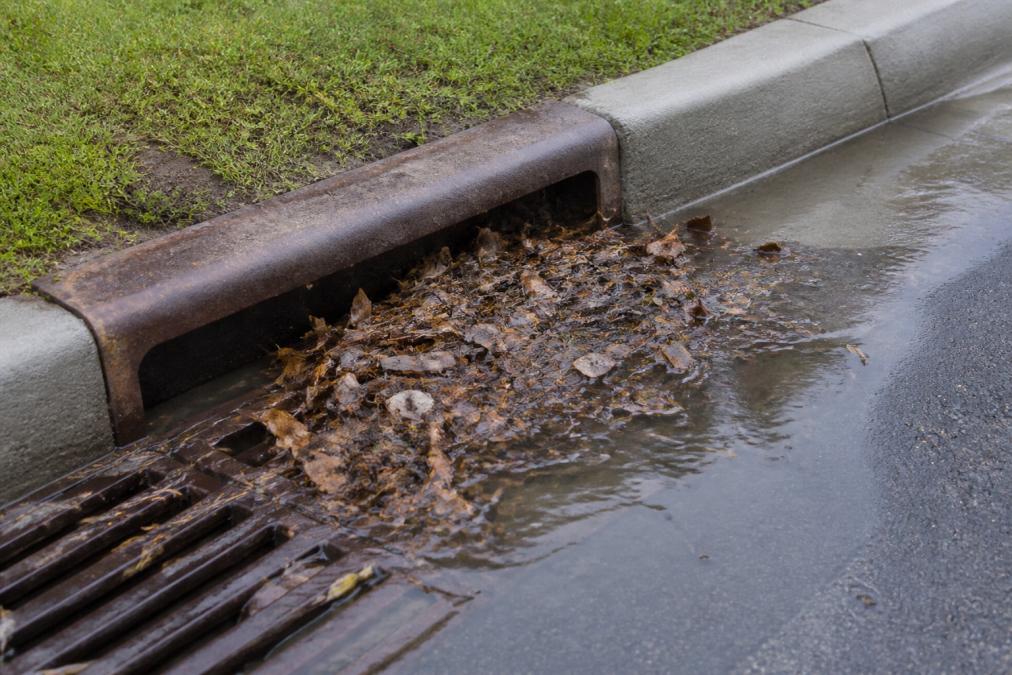
The clearest sign of a clogged catch basin is standing water around a storm drain after rain stops. If water lingers more than an hour or two, the basin is not draining.
Here are the seven signals we tell property managers to watch for:
- Water pooling around the grate long after rainfall ends
- Slow drainage during storms, even light ones
- Foul odors rising from the grate on warm days
- Visible debris packed into the curb inlet
- Sinkholes or soft spots in nearby pavement
- Gurgling sounds from the drain during rain
- Sewer gas smells near the basin, which point to trapped rotting material
Visual Clues at the Surface
Water pooling and ponding are the easiest signs to spot. Look at the curb and gutter line after a storm. If the gutter holds water while the rest of the street drains, that basin is blocked.
Smells, Sounds, and Slow Drainage
Foul odors and sewer gas mean organic material is decomposing below. Gurgling means trapped air is pushing back through the water. Both point to a clogged outlet.
How to Unclog a Storm Drain: Step-by-Step
Learning how to unclog a storm drain safely starts with knowing what you can reach and what you cannot. Most surface clogs clear with hand tools. Deep blockages need professional equipment, and the two categories are not interchangeable.
Total Time: 30-60 minutes for surface debris
Difficulty: Beginner for surface work, professional for deep clogs
Surface-Level Clearing (DIY)
Follow these steps only if you can see the bottom of the basin and the outlet pipe:
- Clear the grate by hand. Remove leaves, trash, and twigs sitting on top.
- Lift the grate with a pry bar or grate hook. Set it aside safely.
- Scoop surface debris with a drain shovel or bucket. Bag it, don’t leave it on the curb.
- Check the outlet pipe with a flashlight. Look for a visible plug of debris.
- Flush with a garden hose if the outlet looks partly open.
- Stop if water does not move. That means the clog is deeper than you can reach.
- Call a professional for hydro-jetting or vacuum removal.
What Professional Equipment Actually Does
Most articles say “call a pro” and stop there. Here is what that call actually involves, so you know what you are paying for and what to ask about.
Hydro-jetting. A hydro-jetter pushes water through a specialized hose with a forward-facing nozzle at pressures commonly ranging from about 1,500 to 4,000 PSI for municipal and commercial storm lines. The forward jet cuts through the plug while rear-facing jets flush debris back toward the basin for removal. This is the standard method for grease, hardened sediment, and root intrusion that a hose cannot touch.
Vacuum trucks. A vacuum truck uses a high-capacity vacuum pump and a large holding tank to lift out the material a jetter loosens. Most catch basin cleaning is a two-step process: jet to break up the plug, vacuum to remove it. A jetter alone can push debris further downstream; a vacuum alone cannot break up a hardened plug. The pairing is the point.
CCTV inspection. A closed-circuit camera pushed or crawled through the line shows whether the pipe is clear, cracked, offset, or still partially blocked. This is how a contractor confirms the job is actually done rather than guessing from the surface.
Confined-space gear. Any entry below the grate is a confined space.
If you can’t see the bottom of the basin or the outlet pipe, stop. That’s the line between a homeowner job and a professional one.
Never pour chemicals into a catch basin to clear a clog. Those chemicals flow straight into stormwater systems and local waterways, and many municipalities prohibit it.
Catch Basin Cleaning Frequency: A Seasonal Schedule
Catch basin cleaning frequency depends on tree cover, traffic, and rainfall, but two seasons drive the majority of clogs: fall leaf drop and spring thaw. Most properties need at least two full cleanings a year, with additional checks in heavy leaf areas. The schedule below is the one we recommend for most commercial and residential sites.
| Season | Task | Why It Matters |
|---|---|---|
| Early Spring (after thaw) | Full clean and inspect | Clears winter sand, salt, and grit that hardened in the sump |
| Late Spring | Debris check after first heavy rains | Catches post-storm buildup before summer |
| Early Fall (before leaf drop) | Full clean | Starts the worst clog season with a clear basin |
| Mid-Fall (during leaf drop) | Debris check every 2-3 weeks | Leaf volume peaks fast; a single storm can pack a grate |
| Late Fall (after leaf drop ends) | Full clean | Removes what fell after the early-fall cleaning |
| Winter | Visual check after each thaw | Catches ice damage, cracks, and refreeze blockages |
Why Fall and Spring Are the Two Danger Windows
Fall leaf drop. Leaves do not just sit on the grate. They wash into the basin, mat over the outlet, and decompose into a dense, fibrous plug that a garden hose cannot move. In heavy tree cover, a basin that was clear in September can be fully blocked by the first November storm. The fix is a cleaning before leaf drop starts, not after the first flood.
How Tree Cover Changes the Schedule
A basin under open sky may only need two cleanings a year. A basin under mature deciduous trees may need four or more. As a rule of thumb, the more canopy directly over the basin, the shorter the interval between cleanings.
Preventative maintenance beats emergency calls every time. A basin cleaned before leaf drop and again after thaw rarely floods in between.
Catch Basin Inspection Checklist for Property Managers
A catch basin inspection checklist keeps multi-site maintenance consistent. Use the same list at every property so nothing gets missed.
- Check water level inside the basin
- Look for cracks in the walls and frame
- Confirm the outlet pipe flows freely
- Measure sediment depth in the sump
- Note debris type and volume
- Check the grate for damage or missing bars
- Photograph the basin before and after
- Log the date and schedule the next visit
DIY vs. Professional Equipment: What You Can and Cannot Do
Surface debris removal is a reasonable DIY task. Anything below the grate usually is not. The gap comes down to equipment.
- DIY tools: rake, drain shovel, pry bar, garden hose, bucket
- Professional tools: vacuum truck, hydro-jetting rig, CCTV camera, confined-space gear
When a Clogged Catch Basin Becomes a Legal Liability
A neglected catch basin can create real legal exposure for property owners. When a clogged catch basin causes flooding that damages a neighboring property or causes a slip injury, the owner may be held responsible.
Skipping maintenance to save money can cost far more in flood damage claims and code violations. Document every cleaning.
Frequently Asked Questions
Do catch basins get clogged?
Yes. Catch basins collect stormwater runoff from streets, parking lots, and yards, and they trap sediment, leaves, and organic debris before it reaches the sewer system. Over time, that material builds up and blocks the outlet pipe. A clogged catch basin can cause water pooling, foul odors, and even structural damage. Regular cleaning prevents most blockages.
How often should catch basins be cleaned to prevent clogs?
Catch basin cleaning frequency depends on location and debris load. High-traffic commercial lots and areas with heavy tree cover often need cleaning twice a year or more. Residential basins may only need annual service. After fall leaf drop and spring storms, inspect every basin. If you notice standing water or slow drainage between scheduled cleanings, call a professional sooner.
Can a drain blockage clear itself?
A minor blockage from loose leaves might wash through during a heavy rain, but most catch basin clogs do not clear on their own. Sediment buildup, compacted organic debris, and debris trapped in the outlet pipe stay put. Waiting for rain to flush the system often makes things worse by adding hydrostatic pressure. Manual removal or hydro-jetting is the reliable fix.
What happens if a clogged catch basin is left alone?
A neglected catch basin leads to standing water that can undermine pavement, create sinkholes, and flood nearby property. Foul odors from sewer gas become a nuisance. In freezing temperatures, trapped water expands and cracks concrete. For commercial property managers, a clogged basin that causes flooding or a slip-and-fall accident can create liability exposure. Address the signs early to avoid costly repairs.
Catch basin problems rarely announce themselves. They build quietly until the first big storm exposes them. Jonnie On The Spot has kept Mid-Michigan drainage systems flowing for over 40 years with licensed and insured crews, professional hydro-jetting and vacuum equipment, and recurring maintenance plans built for both single homes and multi-site portfolios. Get a quote from Jonnie On The Spot and keep your property dry, compliant, and on schedule.