

Table of Contents
- Why Hydro Excavation Is Safer Than Traditional Digging
- Hydro Excavation vs Traditional Excavation: Key Differences
- Hydro Excavation Near Underground Utilities: How It Protects Lines
- Hydro Excavation Daylighting: Safely Exposing Buried Infrastructure
- Hydro Excavation Risks and Precautions You Should Know
- Step-by-Step: The Hydro Excavation Process for Safety
- Frequently Asked Questions
Last Updated: October 9, 2026
Why Hydro Excavation Is Safer Than Traditional Digging
Hydro excavation is a digging method that uses pressurized water and a vacuum to remove soil. It is safer than traditional digging because water cuts through dirt without cutting through gas, water, or electric lines. At Jonnie On The Spot, we have used this method for years on job sites around Saginaw, MI.
Here is the core problem with a backhoe. Steel does not know the difference between a rock and a gas line. One wrong scoop can cut a live wire or crack a pipe.
Hydro excavation removes that risk. The water pressure is strong enough to break up soil. It is not strong enough to slice through a utility line.
That is the whole safety story in one sentence.
But there is more to it. Below, we explain how the process works, where it protects you, and what can still go wrong if the crew is careless.
The main safety benefit of hydro excavation is simple: water and air cannot cut a buried line, but a metal bucket can. That single fact prevents most utility strikes.
Hydro Excavation vs Traditional Excavation: Key Differences
The biggest difference is the digging tool. Traditional excavation uses a metal bucket on an excavator or backhoe. Hydro excavation uses a high-pressure water wand and a vacuum hose.
That changes everything about how the job feels on site.
- Traditional digging: fast, forceful, and blind. You dig first and hope you miss the lines.
- Hydro excavation: slower, precise, and controlled. You dig only where you aim the wand.
- Soil handling: a backhoe piles dirt on the ground. A vacuum truck pulls it into a tank.
- Damage risk: high with metal teeth, low with water.
- Crew safety: less time in the trench with hydro excavation.
Traditional digging still has its place. For open areas with no buried lines, an excavator is faster and cheaper. But near any utility, the math changes.
We treat hydro excavation as the default near lines, not the backup plan.
Hydro Excavation Near Underground Utilities: How It Protects Lines
Hydro excavation protects underground utilities by removing soil with water instead of metal. The water breaks up the dirt, and the vacuum lifts it away. The line itself stays untouched.
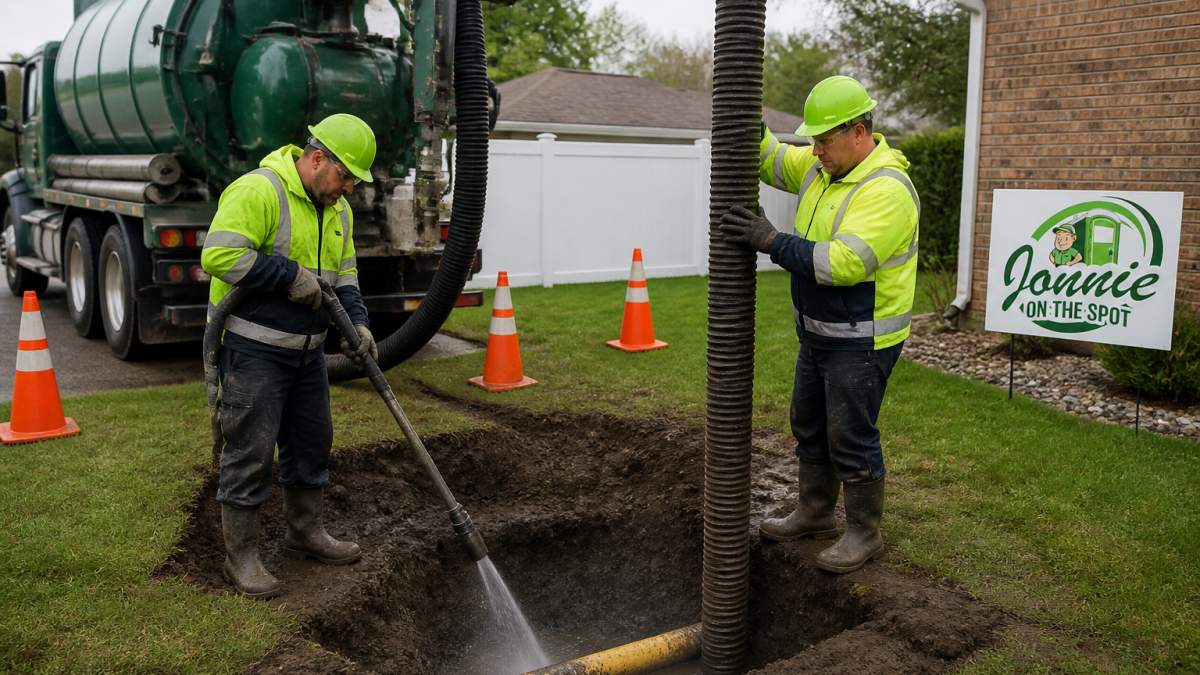
Think about what is buried under a typical Saginaw street or yard. Gas, water, sewer, electric, fiber, and cable can all run within a few feet of each other. Some of those lines are decades old and fragile.
A metal bucket hitting a gas line can spark. That is how explosions start. Hitting a fiber line can knock out service for a whole block.
Water does neither. It cannot spark. It cannot slice.
The Common Ground Alliance damage prevention guidance stresses that accurate locating and careful digging near marked lines prevent most utility strikes. Hydro excavation fits that guidance well.
Never let a crew dig near marked utilities without first calling 811 for a locate. Hydro excavation lowers the risk, but it does not replace knowing where the lines are.
Hydro Excavation Daylighting: Safely Exposing Buried Infrastructure
Daylighting is the practice of exposing a buried line so workers can see it. Hydro excavation is the safest way to daylight a utility.
Here is why. When you daylight a line, you are digging right next to it. There is no room for error. A backhoe cannot do this without risk. Water can.
Daylighting matters for several reasons:
- Repair crews need to see the line before they touch it
- Inspectors need to confirm depth and condition
- New construction needs to tie into existing lines
- Leak detection starts with exposure
A pothole dug by hand is slow and tiring. A pothole dug by machine is risky. Hydro excavation sits in the middle. It is faster than a shovel and safer than a bucket.
We dig these potholes on almost every utility job we take on.
Hydro Excavation Risks and Precautions You Should Know
Hydro excavation is safer, but it is not risk-free. Knowing the limits keeps crews and property safe.
The main risks are:
- High-pressure water injuries. A wand at full pressure can cut skin. Crews need training and protective gear.
- Trench collapse. Wet soil is heavy and unstable. Shoring or sloping is required before anyone enters.
- Electrical contact. Water and electricity do not mix. Crews must keep a safe distance from live lines.
- Spoil handling. The vacuum tank fills with wet slurry that must be disposed of properly.
Precautions are straightforward. Train the crew. Call 811 before digging. Shore the trench. Keep water away from live power.
The Occupational Safety and Health Administration excavation standards require protective systems for trenches at certain depths. Those rules apply no matter which digging method you use.
A careless crew can still cause damage with water. The method lowers risk. It does not remove the need for care.
Step-by-Step: The Hydro Excavation Process for Safety
Here is how a safe hydro excavation job runs, start to finish.
- Call 811 and wait for locates. Marked lines come first. No marks, no digging.
- Plan the pothole. Decide exactly where to dig and how deep.
- Set up the truck and safety zone. Cones, barriers, and a clear path for the hose.
- Start with low pressure. Test the soil before going full force.
- Dig with the wand. Work in small passes near the line.
- Vacuum the spoil. The hose pulls slurry into the tank as you dig.
- Expose the line. Stop when the utility is fully visible.
- Inspect and document. Check the line and record its position.
- Backfill or protect. Refill the hole or leave the line ready for the next crew.
| Step | Action | Why It Matters |
|---|---|---|
| 1 | Call 811 for locates | Prevents hitting unmarked lines |
| 2-3 | Plan and set up | Keeps the crew and public safe |
| 4-6 | Dig and vacuum | Removes soil without cutting lines |
| 7-8 | Expose and inspect | Confirms the line is intact |
| 9 | Backfill or protect | Leaves the site safe and stable |
The whole process is slower than a backhoe. That is the trade-off. You trade speed for safety, and near a live line, that trade is worth it.
A buried utility strike can shut down a project, cut off a neighborhood, or worse. Choosing the right crew matters as much as choosing the right method. At Jonnie On The Spot, we bring over 40 years of Mid-Michigan experience to every hydro excavating job. Our licensed and insured team handles safe, non-destructive utility exposure, and we pair it with septic, catch basin, and portable restroom services so one crew covers your whole site. If you need hydro excavation in Saginaw or the surrounding area, get a quote and keep your project on schedule and up to code.
Frequently Asked Questions
Why is hydro excavation safer than traditional digging?
Hydro excavation uses pressurized water and a vacuum to break up and remove soil, so the digging tool never makes direct contact with buried lines. Traditional mechanical digging relies on metal buckets and teeth that can easily cut through gas, water, or fiber optic lines. Because water pressure is adjustable and non-sparking, the risk of a catastrophic strike drops significantly. This is why hydro excavation is the preferred method for potholing and working in areas with known utilities.
How does hydro excavation help protect underground utilities?
The process relies on water pressure to loosen soil while a vacuum simultaneously removes the slurry. There is no metal-to-pipe contact, so the chance of puncturing or cracking a line is greatly reduced. Operators can also dial down the pressure when they get close to a line, which gives them precise control. For gas and water lines in particular, this gentle approach prevents sparks and ruptures that could lead to explosions or flooding.
What are the risks of hydro excavation and what precautions should be taken?
Even though hydro excavation is safer, it still carries risks. High-pressure water can cause injuries if misdirected, and the slurry can create slippery surfaces. There is also the danger of hitting an unmarked line if a utility locate was not performed. Precautions include calling 811 before any dig, wearing proper personal protective equipment, using a spotter, and setting the water pressure appropriately for the soil and depth. Proper training and equipment maintenance are also essential.
When should a contractor use hydro excavation instead of mechanical excavation?
Hydro excavation is best when working near known or suspected underground utilities, especially in crowded areas where multiple lines run close together. It is also ideal for potholing to verify the exact location and depth of lines before a larger project. If the soil is hard clay or rocky, mechanical digging may be faster, but hydro excavation still wins on safety. For any job that requires daylighting or working within the tolerance zone around utilities, hydro excavation is the go-to method.